Extend atomic knowledge
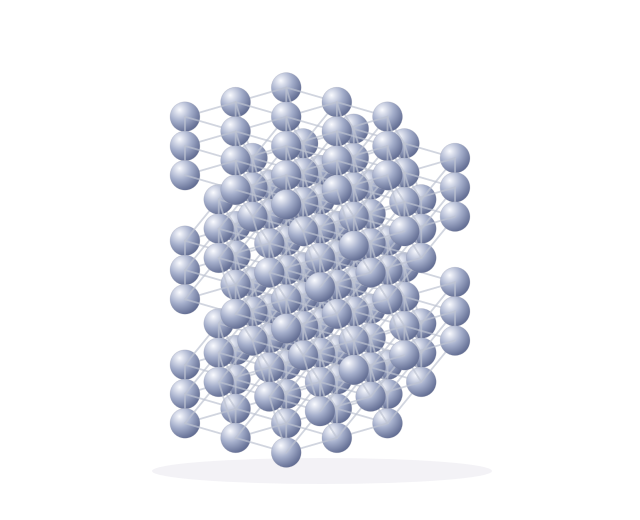
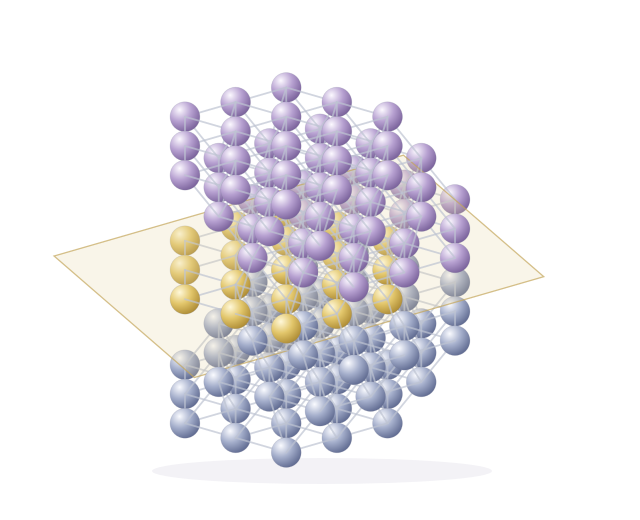
Learned potentials and energy models carry atomic information into larger-scale computation. NN-MGSF with DFD shows how layer interactions shape collective defect evolution.
NN-MGSF / DFD →Materials Physics AI Platform
Bring high-fidelity computing, material knowledge and learned prediction into a workflow for material design, virtual testing and faster simulation.
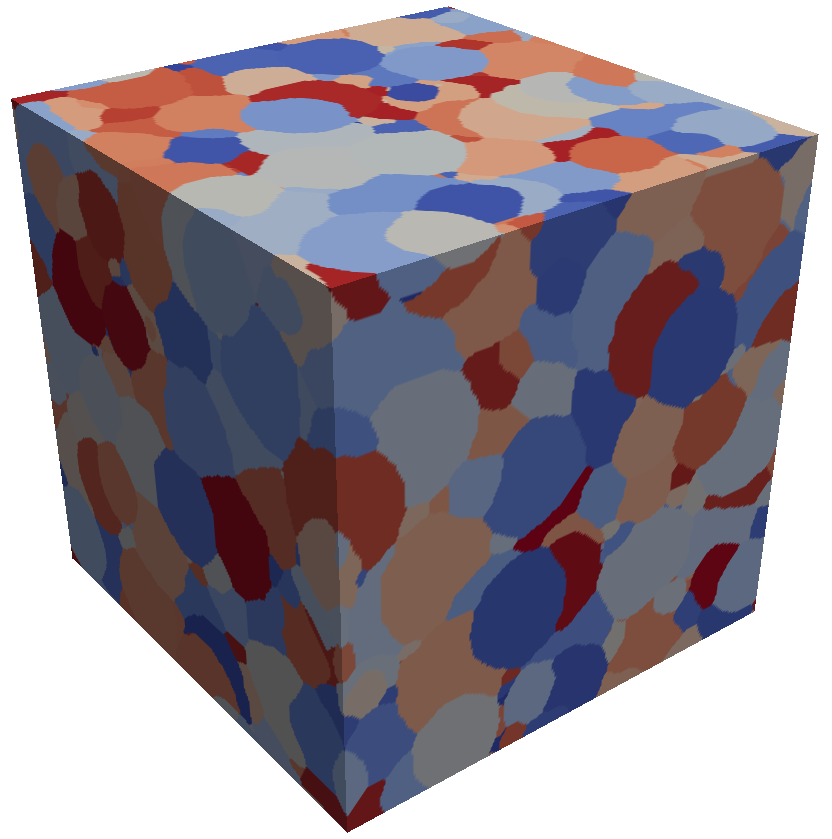
Equivalent material parameters describe a response. Atomic interactions, defects and microstructure explain how that response changes. We connect these scales to bring composition and processing into material design.
01 / Generate data
From atomic energies to evolving microstructures, numerical methods reveal the behavior that a model needs to learn. GPU parallelism supports repeated simulations and parameter exploration.
Choose the right scale: DFT and MD for atomic behavior, DFD and phase field for defects and structure, FEM for mechanical response.
Use computation to explore more material states and build the foundation for reusable prediction.
Explore parallel numerical computation →02 / Train models
Build models around the prediction you need. Use simulation and experimental data, physical laws, or both to learn material energies, fields and evolving states.
Learned potentials and energy models carry atomic information into larger-scale computation. NN-MGSF with DFD shows how layer interactions shape collective defect evolution.
NN-MGSF / DFD →Learn reusable responses as material distributions, interfaces and initial states change. Choose the model around the structure and behavior you want to explore.
PDCO / MPTT / evolution surrogates →03 / Validate
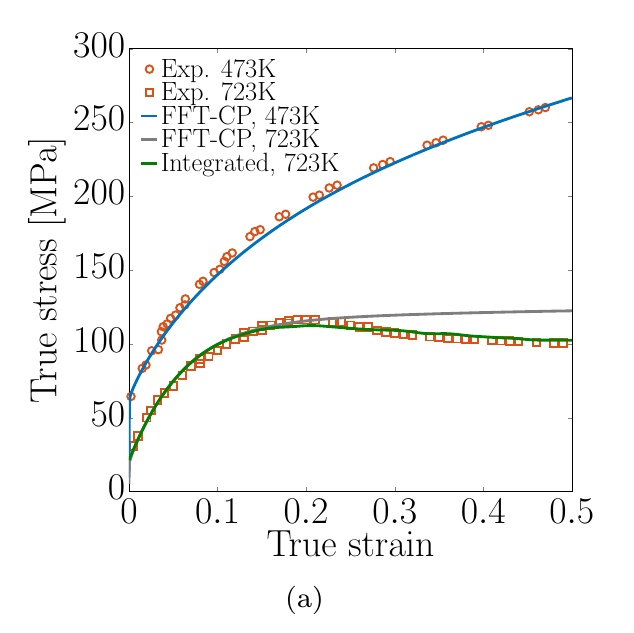
Compare predictions with high-fidelity results and physical behavior, then assess the benefit in the computation that matters to your team.
Follow changes in geometry, material state and loading.
Connect local fields, interfaces and evolving states.
Put prediction quality and total computation side by side.
04 / Predict & solve
Use a surrogate to explore material responses directly, or bring its predicted fields into FEM. Numerical correction connects learned prediction with established engineering computation.
Query fields and changing states across related material problems, making repeated exploration easier.
Explore direct void-evolution prediction →Start from a predicted field and retain the solver’s correction process and accuracy requirements.
Explore MPTT + FEM correction →MPTT predicts the elastic field, FEM corrects it, and the evolving void continues to change. Learning and numerical physics work together in the same loop.
Explore MPTT with FEM →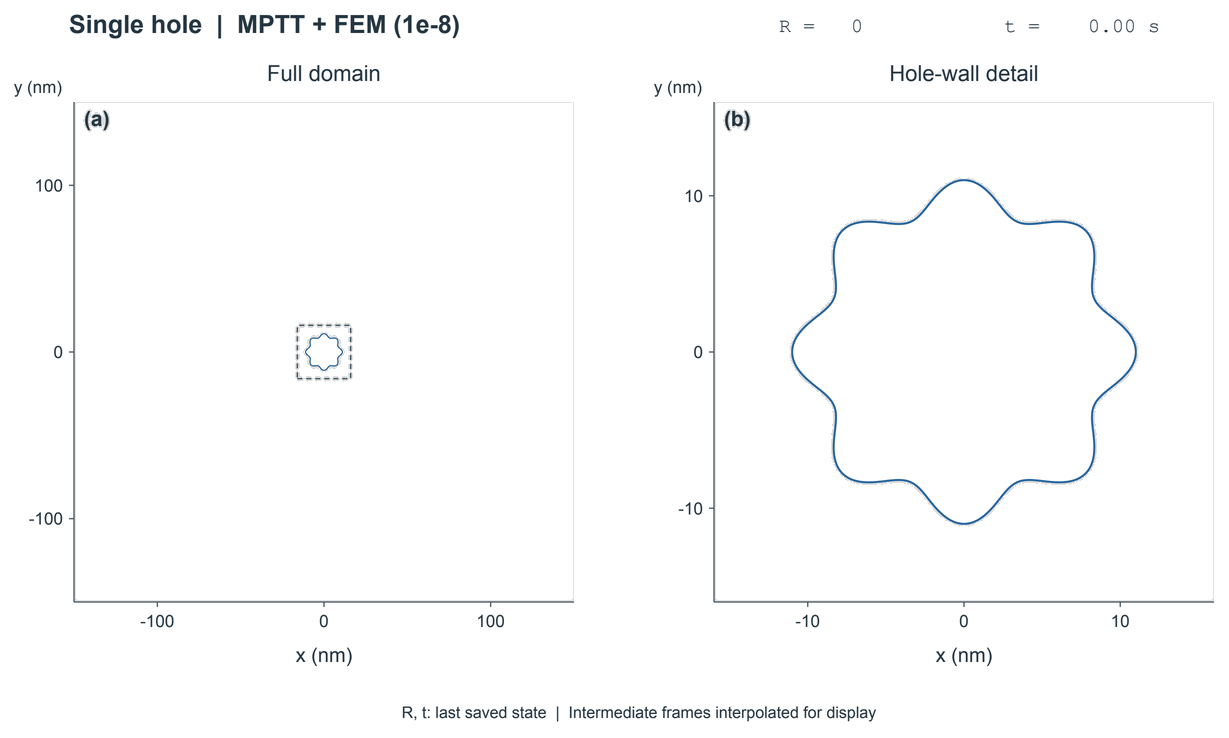
Keep building the material knowledge behind the next prediction.
Connect the response you want to the composition, defects and processing choices you can change. Build material-specific workflows around strength, deformation, damage and fatigue objectives.
Start with the material, the performance target and the decision you need to make.